ladies at autoexpo

CHECK ALL THE BEAUTIES AT AUTO EXPO WITH THEIR CARS AND CHECK ALL ENTERTAINMENT NEWS .

FACEBOOK TRICK UPSIDE DOWN

ENJOY FACEBOOK TRICKS AND TIPS AND UPDATES PROVIDED AND ALMOST EVERY TRICKS AND TIPS UPDATING DAILY .

OLD AND NEW SONGS DOWNLOADS

DOWNLOAD ALL TELUGU SONGS NEW SONGS AND OLD SONGS ,ALL UPDATED ,ARRANGED IN SYMBOL-WISE SEARCH .

DOWNLOAD BEAUTIFUL WALLPAPERS

DOWNLOAD ALL KINDS OF WALLPAPERS LIKE CARS , ACTRESS , ABSTRACT , AND ALMOST ALL KINDS ... .

celebrities caught

ENJOY THE CONTENT PROVIDED FOR REGULAR VIEWERS FOR MY WEBSITE , DAILY REFRESHED CONTENT .

Showing posts with label interesting facts. Show all posts

Friday, 25 February 2011

Komodo dragons


Komodo dragons have thrived in the harsh climate of Indonesia's Lesser Sunda Islands for millions of years, although amazingly, their existence was unknown to humans until about 100 years ago.
Reaching 10 feet (3 meters) in length and more than 300 pounds (136 kilograms), Komodo dragons are the heaviest lizards on Earth. They have long, flat heads with rounded snouts, scaly skin, bowed legs, and huge, muscular tails.
As the dominant predators on the handful of islands they inhabit, they will eat almost anything, including carrion, deer, pigs, smaller dragons, and even large water buffalo and humans. When hunting, Komodo dragons rely on camouflage and patience, lying in wait for passing prey. When a victim ambles by, the dragon springs, using its powerful legs, sharp claws and serrated, shark-like teeth to eviscerate its prey.
Animals that escape the jaws of a Komodo will only feel lucky briefly. Dragon saliva teems with over 50 strains of bacteria, and within 24 hours, the stricken creature usually dies of blood poisoning. Dragons calmly follow an escapee for miles as the bacteria takes effect, using their keen sense of smell to hone in on the corpse. A dragon can eat a whopping 80 percent of its body weight in a single feeding.
There is a stable population of about 3,000 to 5,000 Komodo dragons on the islands of Komodo, Gila Motang, Rinca, and Flores. However, a dearth of egg-laying females, poaching, human encroachment, and natural disasters has driven the species to endangered status.
interesting facts


Fast Facts

Type:
Reptile
Diet:
Carnivore
Average life span in the wild:
Up to 70 years
Size:
Up to 15 ft (4.6 m)
Weight:
Up to 2,000 lbs (907 kg)
Group name:
Bask (on land) or float (in water)
Protection status:
Endangered
Did you know?
One of the largest known populations of American crocodiles is in the Dominican Republic's Lago Enriquillo, a landlocked, hypersaline lake located about 131 ft (40 m) below sea level.
Size relative to a 6-ft (2-m) man:

american crocodile history

The American crocodile is considered an endangered species in nearly all parts of its North, Central, and South American range. Survey data, except in the United States, is poor or nonexistent, but conservationists agree that illegal hunting and habitat depletion has reduced populations of this wide-ranging reptile to critical levels.

A small, remnant population lives in southern Florida, but most are found in southern Mexico, Central America, the Caribbean, and northern South America. Their habitat of choice is the fresh or brackish water of river estuaries, coastal lagoons, and mangrove swamps.
A prehistoric-looking creature, it is distinguishable from its cousin, the American alligator, by its longer, thinner snout, its lighter color, and two long teeth on the lower jaw that are visible when its mouth is closed.
This species is among the largest of the world's crocodiles, with Central and South American males reaching lengths of up to 20 feet (6.1 meters). Males in the U.S. population rarely exceed 13 feet (4 meters), however.
Their diet consists mainly of small mammals, birds, fish, crabs, insects, snails, frogs, and occasionally carrion. They have been known to attack people, but are far more likely to flee at the sight of humans.
Most countries in the American crocodile's range have passed protection laws, but unfortunately, few governments provide adequate enforcement.

biggest anaconda history

iMember of the boa family, South America’s green anaconda is, pound for pound, the largest snake in the world. Its cousin, the reticulated python, can reach slightly greater lengths, but the enormous girth of the anaconda makes it almost twice as heavy.

Green anacondas can grow to more than 29 feet (8.8 meters), weigh more than 550 pounds (227 kilograms), and measure more than 12 inches (30 centimeters) in diameter. Females are significantly larger than males. Other anaconda species, all from South America and all smaller than the green anaconda, are the yellow, dark-spotted, and Bolivian varieties.
Anacondas live in swamps, marshes, and slow-moving streams, mainly in the tropical rain forests of the Amazon and Orinoco basins. They are cumbersome on land, but stealthy and sleek in the water. Their eyes and nasal openings are on top of their heads, allowing them to lay in wait for prey while remaining nearly completely submerged.
They reach their monumental size on a diet of wild pigs, deer, birds, turtles, capybara, caimans, and even jaguars. Anacondas are nonvenomous constrictors, coiling their muscular bodies around captured prey and squeezing until the animal asphyxiates. Jaws attached by stretchy ligaments allow them to swallow their prey whole, no matter the size, and they can go weeks or months without food after a big meal.
Female anacondas retain their eggs and give birth to two to three dozen live young. Baby snakes are about 2 feet (0.6 meters) long when they are born and are almost immediately able to swim and hunt. Their lifespan in the wild is about ten years.

Tuesday, 22 February 2011

ratan tata


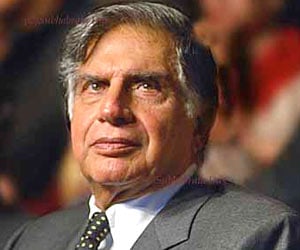
Ratan Tata

Born: December 28, 1937
Achievement: Honored with Padma Bhushan, one of the highest civilian awards in 2000.

Ratan Tata is presently the Chairman of Tata Sons, the holding company of the Tata Group. Ratan Naval Tata is also the Chairman of the major Tata companies such as Tata Steel, Tata Motors, Tata Power, Tata Consultancy Services, Tata Tea, Tata Chemicals, Indian Hotels and Tata Teleservices. He has taken Tata Group to new heights and under his leadership Group's revenues have grown manifold.

Ratan Tata was born on December 28, 1937, in Bombay. He received a Bachelor of Science degree in architecture from Cornell University in 1962. Ratan Tata had a short stint with Jones and Emmons in Los Angeles, California, before returning to India in late 1962. He joined the Tata Group and was assigned to various companies before being appointed director-in-charge of The National Radio & Electronics Company (NELCO) in 1971. Ratan Tata was appointed Chairman of Tata Industries in 1981. He was assigned the task of transforming the company into a Group strategy think-tank, and a promoter of new ventures in high technology businesses.

In 1991, Ratan Tata took over the Chairmanship from JRD Tata. Under him Tata Consultancy Services went public and Tata Motors was listed in the New York Stock Exchange. In 1998, Tata Motors came up with Tata Indica, the first truly Indian car. The car was the brainchild of Ratan Tata.

Ratan Tata was honored with Padma Bhushan, one of the highest civilian awards in 2000. He was also conferred an honorary doctorate in business administration by Ohio State University, an honorary doctorate in technology by the Asian Institute of Technology, Bangkok, and an honorary doctorate in science by the University of Warwick.

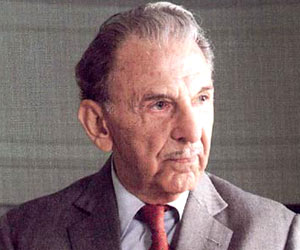
JRD Tata


JRD Tata

Born: July 29, 1904
Died: on November 29, 1993
Achievements: He had the honor of being India's first pilot; was Chairman of tTs for 50 years; launched Air India International as India's first international airline; received Bharat Ratna in 1992.

JRD Tata was one of the most enterprising Indian entrepreneurs. He was a pioneer aviator and built one of the largest industrial houses of India.

JRD Tata was born on July 29, 1904 in Paris. His mother was a French, while his father was Parsi. JRD's full name was Jehangir Ratanji Dadabhoy Tata and he was popularly known as Jeh to his friends. JRD's father Ratanji Dadabhoy Tata and Sri Jamsetji Tata shared their greatness from the same great-great-grandfather, Ervad Jamsheed Tata, a priest of Navsari.

JRD Tata was the second of four children. He was educated in France, Japan and England before being drafted into the French army for a mandatory one-year period. JRD wanted to extend his service in the forces but destiny had something else in store for him. By leaving the French army JRD's life was saved because shortly thereafter, the regiment in which he served was totally wiped out during an expedition in Morocco.

JRD Tata joined Tata & Sons as an unpaid apprentice in 1925. He has great interest in flying. On February 10, 1929, JRD became the first Indian to pass the pilot's examination. With this distinctive honor of being India's first pilot, he was instrumental in giving wings to India by building Tata Airlines, which ultimately became Air India. His passion for flying was fulfilled with the formation of the Tata Aviation Service in 1932.

In 1938, at the age of 34, JRD was elected Chairman of Tata & Sons making him the head of the largest industrial group in India. He started with 14 enterprises under his leadership and half a century later on July 26, 1988, when he left , Tata & Sons was a conglomerate of 95 enterprises which they either started or in which they had controlling interest.

JRD was the trustee of Sir Dorabji Tata Trust from its inception in 1932, which remained under his wings for over half a century. Under his guidance, this Trust established Asia's first cancer hospital, the Tata Memorial Center for Cancer, Research and Treatment, Bombay, 1941. It also founded the Tata Institute of Social Sciences, 1936 (TISS), the Tata Institute of Fundamental Research, 1945 (TIFR), and the National Center for Performing Arts.

In 1948, JRD Tata launched Air India International as India's first international airline. In 1953, the Indian Government appointed JRD as Chairman of Air-India and a director on the Board of Indian Airlines-a position JRD retained for 25-years. For his crowning achievements in Aviation, JRD was bestowed with the title of Honorary Air Commodore of India.

In 1956, JRD Tata initiated a program of closer "employee association with management" to give workers a stronger voice in the affairs of the company. He firmly believed in employee welfare and espoused the principles of an eight-hour working day, free medical aid, workers' provident scheme, and workmen's accident compensation schemes, which were later, adopted as statutory requirements in India.

JRD Tata cared greatly for his workers. In 1979, Tata Steel instituted a new practice; a worker is deemed to be "at work" from the moment he leaves home for work till he returns home from work. The company is financially liable to the worker if any mishap takes place on the way to and from work. Tata Steel Township was also selected as a UN Global Compact City because of the quality of life, conditions of sanitation, roads and welfare that were offered by Tata Steel.

JRD Tata received a number of awards. He received the Padma Vibhushan in 1957 on the eve of silver jubilee of Air India. He also received the Guggenheim Medal for aviation in 1988. In 1992, because of his selfless humanitarian endeavors, JRD Tata was awarded India's highest civilian honor, the Bharat Ratna-one of the rarest instances in which this award was granted during a person's lifetime. In the same year, JRD Tata was also bestowed with the United Nations Population Award for his crusading endeavors towards initiating and successfully implementing the family planning movement in India, much before it became an official government policy.

JRD Tata died in Geneva, Switzerland on November 29, 1993 at the age of 89. On his death, the Indian Parliament was adjourned in his memory-an honor not usually given to persons who are not Members of Parliament.

JRD Tata


JRD Tata

Born: July 29, 1904
Died: on November 29, 1993
Achievements: He had the honor of being India's first pilot; was Chairman of tTs for 50 years; launched Air India International as India's first international airline; received Bharat Ratna in 1992.

JRD Tata was one of the most enterprising Indian entrepreneurs. He was a pioneer aviator and built one of the largest industrial houses of India.

JRD Tata was born on July 29, 1904 in Paris. His mother was a French, while his father was Parsi. JRD's full name was Jehangir Ratanji Dadabhoy Tata and he was popularly known as Jeh to his friends. JRD's father Ratanji Dadabhoy Tata and Sri Jamsetji Tata shared their greatness from the same great-great-grandfather, Ervad Jamsheed Tata, a priest of Navsari.

JRD Tata was the second of four children. He was educated in France, Japan and England before being drafted into the French army for a mandatory one-year period. JRD wanted to extend his service in the forces but destiny had something else in store for him. By leaving the French army JRD's life was saved because shortly thereafter, the regiment in which he served was totally wiped out during an expedition in Morocco.

JRD Tata joined Tata & Sons as an unpaid apprentice in 1925. He has great interest in flying. On February 10, 1929, JRD became the first Indian to pass the pilot's examination. With this distinctive honor of being India's first pilot, he was instrumental in giving wings to India by building Tata Airlines, which ultimately became Air India. His passion for flying was fulfilled with the formation of the Tata Aviation Service in 1932.

In 1938, at the age of 34, JRD was elected Chairman of Tata & Sons making him the head of the largest industrial group in India. He started with 14 enterprises under his leadership and half a century later on July 26, 1988, when he left , Tata & Sons was a conglomerate of 95 enterprises which they either started or in which they had controlling interest.

JRD was the trustee of Sir Dorabji Tata Trust from its inception in 1932, which remained under his wings for over half a century. Under his guidance, this Trust established Asia's first cancer hospital, the Tata Memorial Center for Cancer, Research and Treatment, Bombay, 1941. It also founded the Tata Institute of Social Sciences, 1936 (TISS), the Tata Institute of Fundamental Research, 1945 (TIFR), and the National Center for Performing Arts.

In 1948, JRD Tata launched Air India International as India's first international airline. In 1953, the Indian Government appointed JRD as Chairman of Air-India and a director on the Board of Indian Airlines-a position JRD retained for 25-years. For his crowning achievements in Aviation, JRD was bestowed with the title of Honorary Air Commodore of India.

In 1956, JRD Tata initiated a program of closer "employee association with management" to give workers a stronger voice in the affairs of the company. He firmly believed in employee welfare and espoused the principles of an eight-hour working day, free medical aid, workers' provident scheme, and workmen's accident compensation schemes, which were later, adopted as statutory requirements in India.

JRD Tata cared greatly for his workers. In 1979, Tata Steel instituted a new practice; a worker is deemed to be "at work" from the moment he leaves home for work till he returns home from work. The company is financially liable to the worker if any mishap takes place on the way to and from work. Tata Steel Township was also selected as a UN Global Compact City because of the quality of life, conditions of sanitation, roads and welfare that were offered by Tata Steel.

JRD Tata received a number of awards. He received the Padma Vibhushan in 1957 on the eve of silver jubilee of Air India. He also received the Guggenheim Medal for aviation in 1988. In 1992, because of his selfless humanitarian endeavors, JRD Tata was awarded India's highest civilian honor, the Bharat Ratna-one of the rarest instances in which this award was granted during a person's lifetime. In the same year, JRD Tata was also bestowed with the United Nations Population Award for his crusading endeavors towards initiating and successfully implementing the family planning movement in India, much before it became an official government policy.

JRD Tata died in Geneva, Switzerland on November 29, 1993 at the age of 89. On his death, the Indian Parliament was adjourned in his memory-an honor not usually given to persons who are not Members of Parliament.

Monday, 21 February 2011

meata search engines:


these are the combinations of 2 or more search   engines.  i.e like search results from google+yahoo at once in that way .

       http://twingine.com/          //yahoo+google search at a time
       www.askjeevas.com
       www.altavista.com
       www.dejanews.com
       www.dogpile.com

use keyboard as mouse

in some cases mouse may not work . then to use mouse as keyboard follow as shown ;
left alt+left shift+number lock pressing at a time.then 5 for mouse click and other for moving cursor

use keyboard as mouse

in some cases mouse may not work . then to use mouse as keyboard follow as shown ;
left alt+left shift+number lock pressing at a time.then 5 for mouse click and other for moving cursor

god history

if you are likely to know the history of god and how many gods are there in universe you have to visit www.godchecker.com

god history

if you are likely to know the history of god and how many gods are there in universe you have to visit www.godchecker.com

Twitter Delicious Facebook Digg Stumbleupon Favorites More